
May 28, 2026
Author: Mark Smith
Reading Time: 5 minutes
Australian Native Garden Design: 5 Native Plants That Are Quietly Solving Our Clients' Worst Drainage Problems
By Mark Smith, Founder of Gondwana Landscaping & Stone
For nearly three decades, Gondwana has shaped landscapes across the Byron Shire and Northern Rivers.
When it comes to Byron Bay gardens, salt, slope, and stormwater are massive considerations for design. For homeowners weighing up Australian native garden design, the advantage of working with a landscape architect is in planting choices that help with drainage problems.
What Makes Byron Bay Native Garden Design Different
Byron Bay sits in a coastal-subtropical climate shaped by humidity, salt-laden winds, intense rain events and periodic dry spells. For large and sloping blocks, native landscape design works best when it responds to the site. By understanding the site, we can match plant communities to soils, aspect, drainage, and exposure.
Design Principle: Treat Water as a Feature, Not a Problem
Most drainage problems in Byron Bay are made worse by trying to move water off-site too fast instead of slowing and absorbing it in the right parts of the site, with safe overflow away from buildings and boundaries. Water management becomes more effective and more attractive when a swale, rain garden or planted spoon drain is treated as part of the composition, reflecting Integrated Water Management principles rather than hiding pipes and hoping for the best.
Step 1: Before You Choose Plants
A useful site survey does not need to be complicated, but it must be specific. Record slope, low points, existing vegetation, shade patterns, access routes, soil structure and where birds, bees and other wildlife already move through the block, because those patterns reveal how the site is already functioning.
Track water during and after rain, noting where runoff and downpipe discharge enters, where it ponds, how long it sits, whether seep lines appear, and where it exits. A Tea Tree that thrives nearby often signals persistent moisture, and that kind of local evidence is usually more reliable than assumptions based on a planting label.
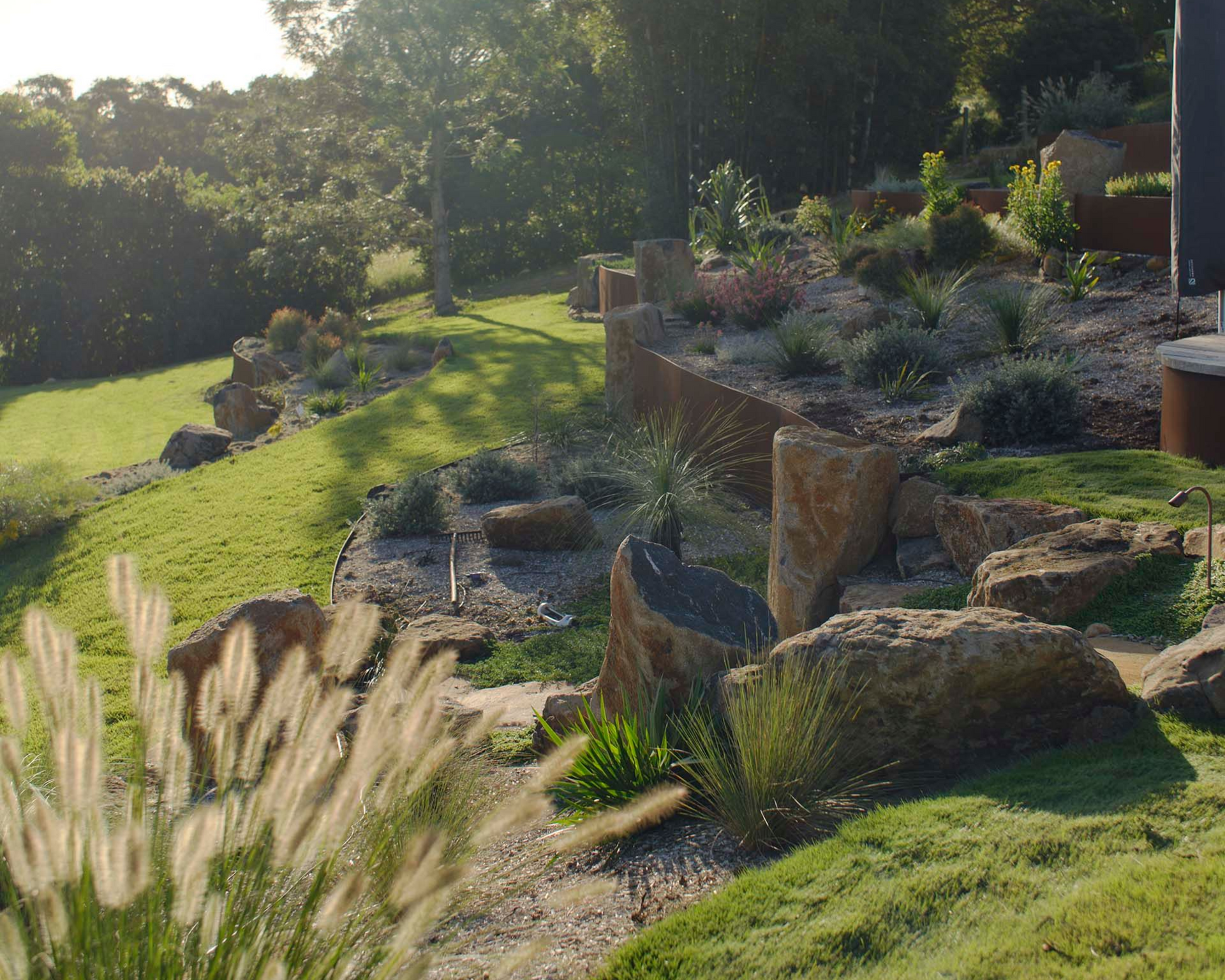
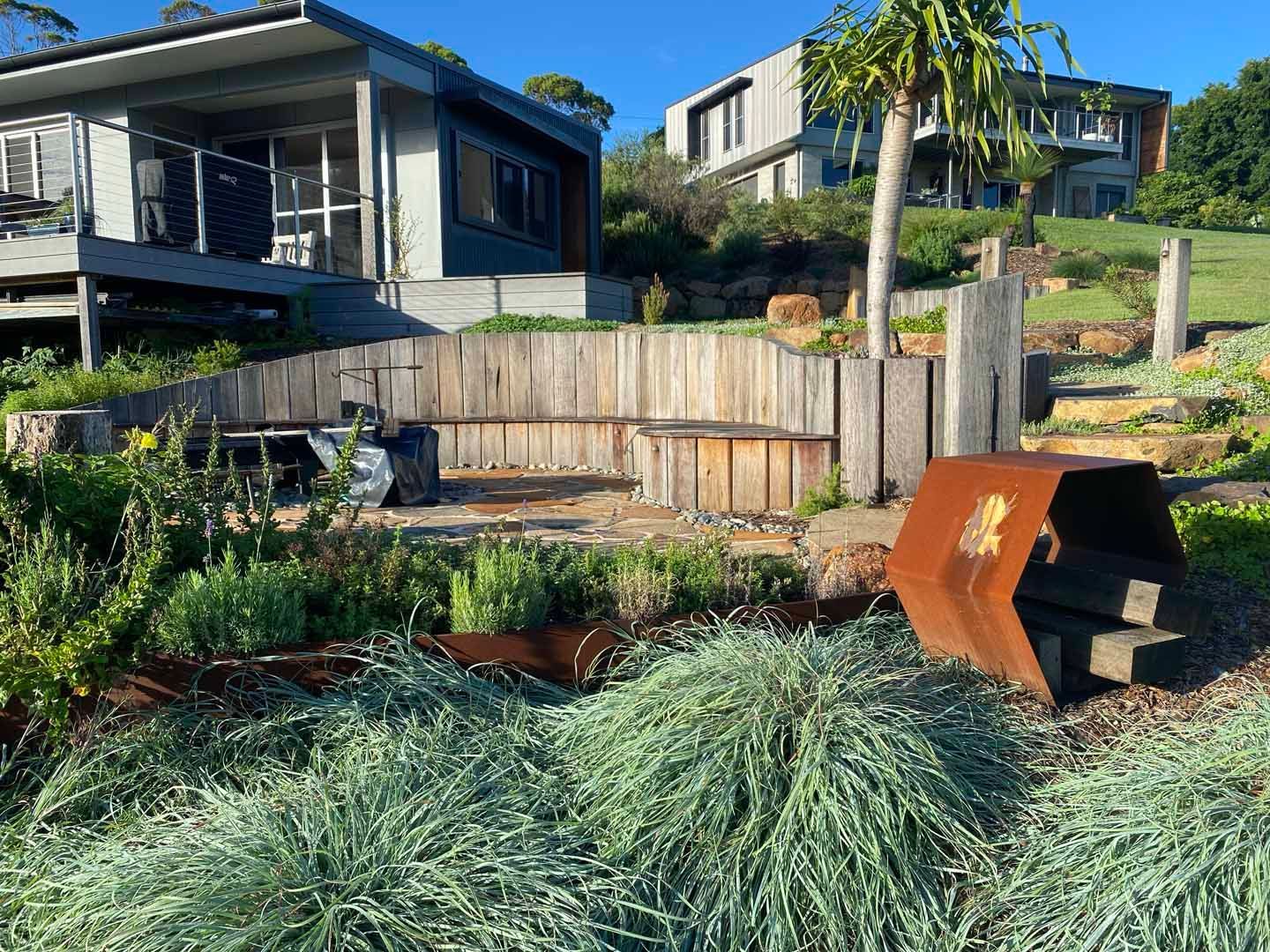
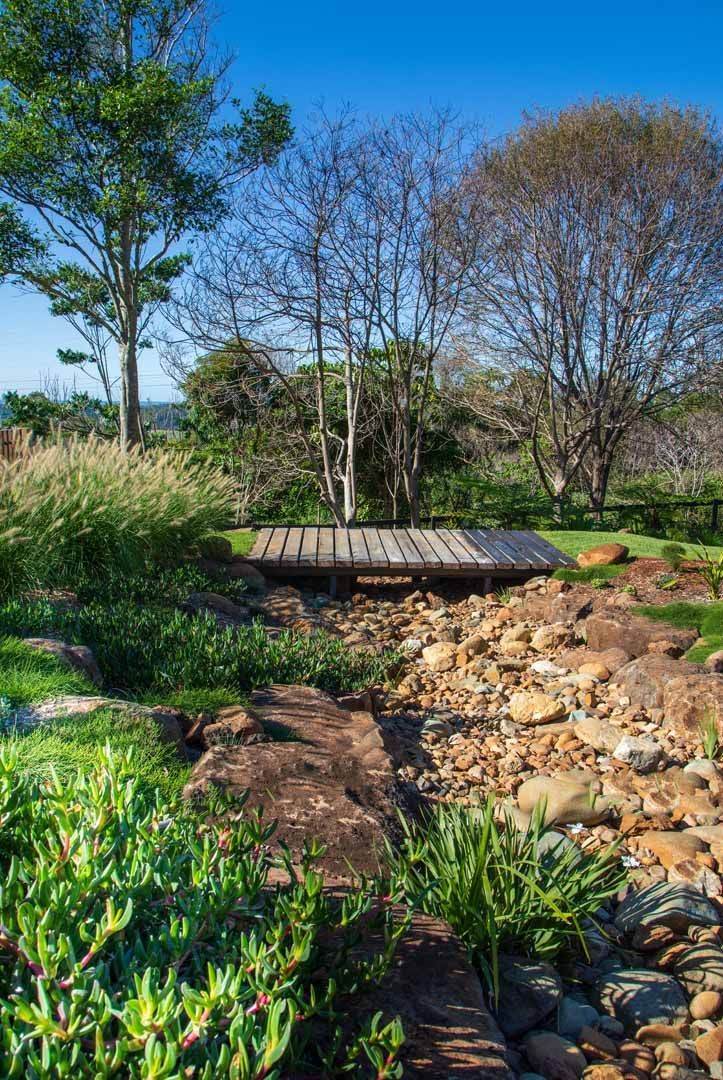
Layered Gardens Which Also Serve as Drainage At Fowlers Lane
Step 2: Choose a Native Plant Palette That Matches Microclimates
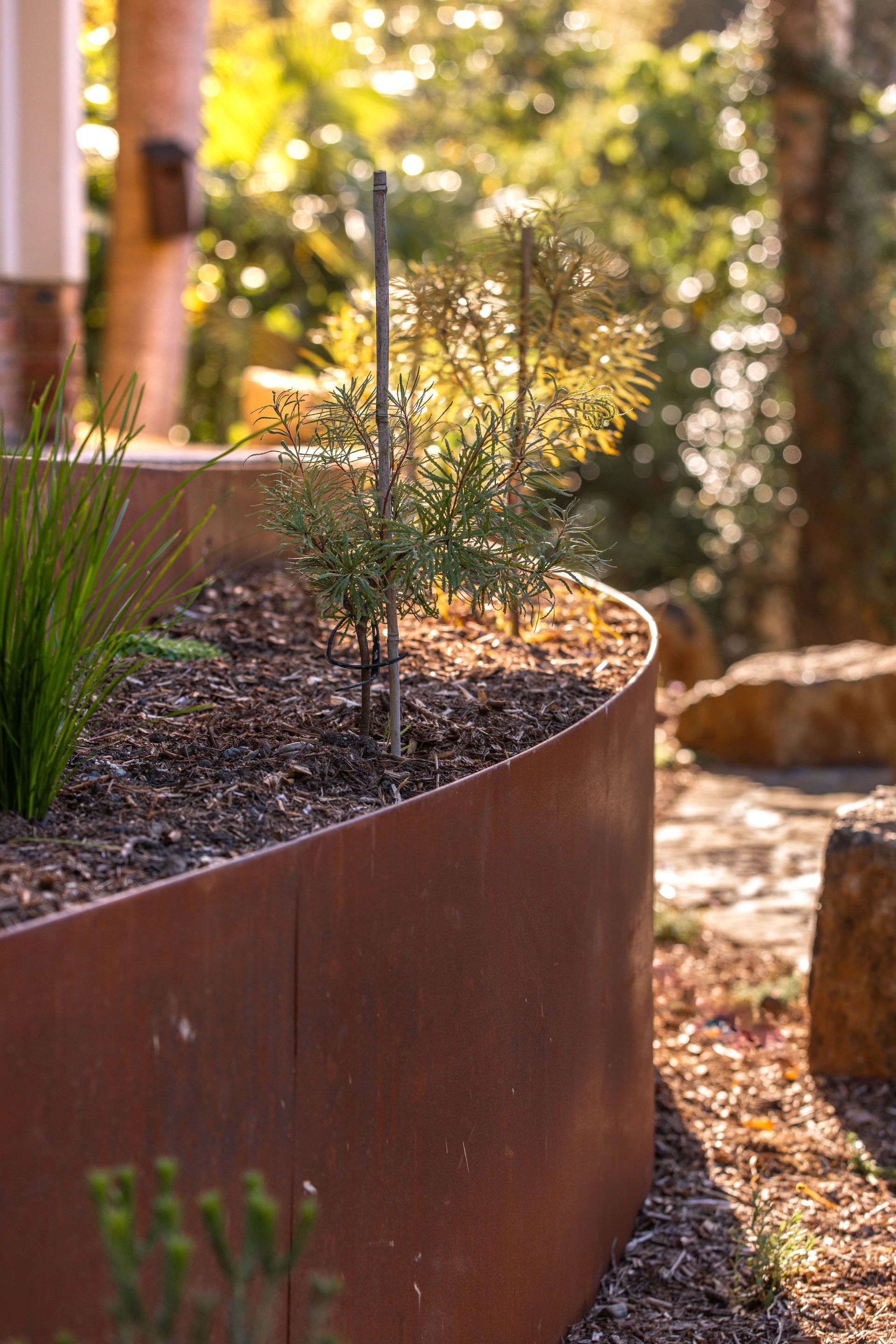
Good native planting design starts with layers: canopy, screening shrubs, mid-storey texture, groundcovers and grasses. A layered palette improves erosion control, supports ecology like frog habitat and gives the garden year-round structure, which is far more durable than relying on a few decorative specimens.
Where possible, use local provenance stock because plants grown from the local area are typically better adapted to local rainfall patterns, pests and soils. Selection should be functional first, with each species assigned a job such as salt tolerance, screening, bank stabilisation or pollinator support.
Five Proven Natives for Drainage-Smart Gardens
1. Ficinia nodosa
Also known as Knobby Club-Rush
Swales, pond margins, low-lying boggy areas, and coastal dunes with intermittent flooding
It is one of the most reliable plants for stabilising soil in a habitat garden near the coast.
2. Baumea rubiginosa
Also known as Jointed Twig-Rush
Permanently wet areas, constructed wetlands, the spots that never fully dry out
It is useful where salt, drought and erosion coincide, which is why it remains a practical groundcover rather than just a flowering accent.
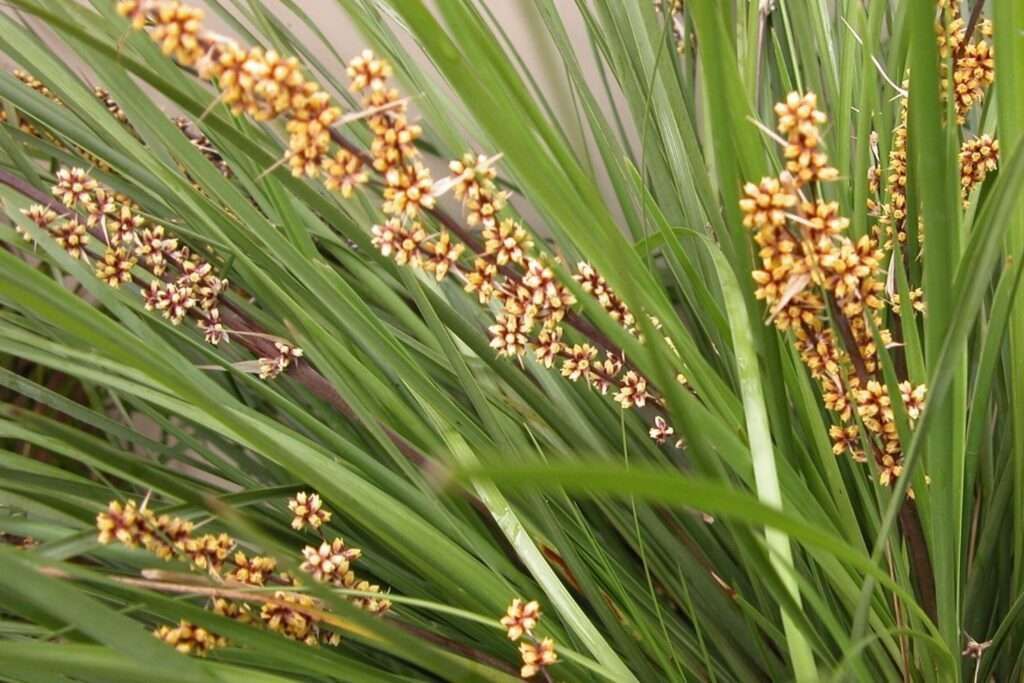
3. Lomandra longifolia
Also known as Spiny-Headed Mat-Rush
Sloping sites, creek beds, and stabilising soils
One of the most adaptable native plants for difficult sites. Its deep fibrous roots bind soil effectively, making it a dependable connector between wet and dry parts of the garden.
4. Melaleuca alternifolia
Also known as Narrow-Leaved Paperbark, Tea Tree
Waterlogged soils, swampy low areas, creek edges, high water table sites
Its high transpiration rate can support water management as part of a broader drainage strategy, while flowers and bark add strong ecological value for birds and bees.
5. Carpobrotus glaucescens
Also known as Pigface
Sloping sites, erosion-prone banks, coastal aspects, slopes that shed water too fast
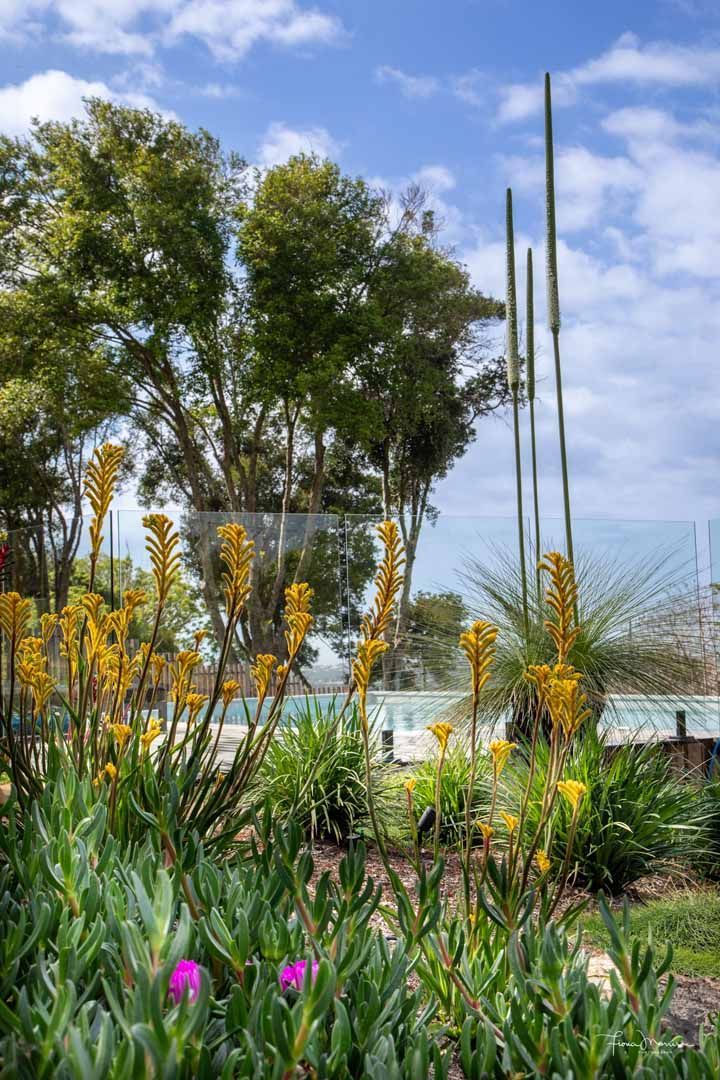
Its thick, trailing stems knit together into a dense mat that can hold soil in place, while the root system works underneath. In heavy rain, it slows sheet flow across a slope, giving water time to infiltrate rather than race.
Step 3: Design the Layout (Form, Function and Flow)
Start with circulation, not planting. Entry sequence, paths, service access and the main views from indoors determine where the garden should feel open, enclosed or textural, and that framework prevents expensive redesign later.
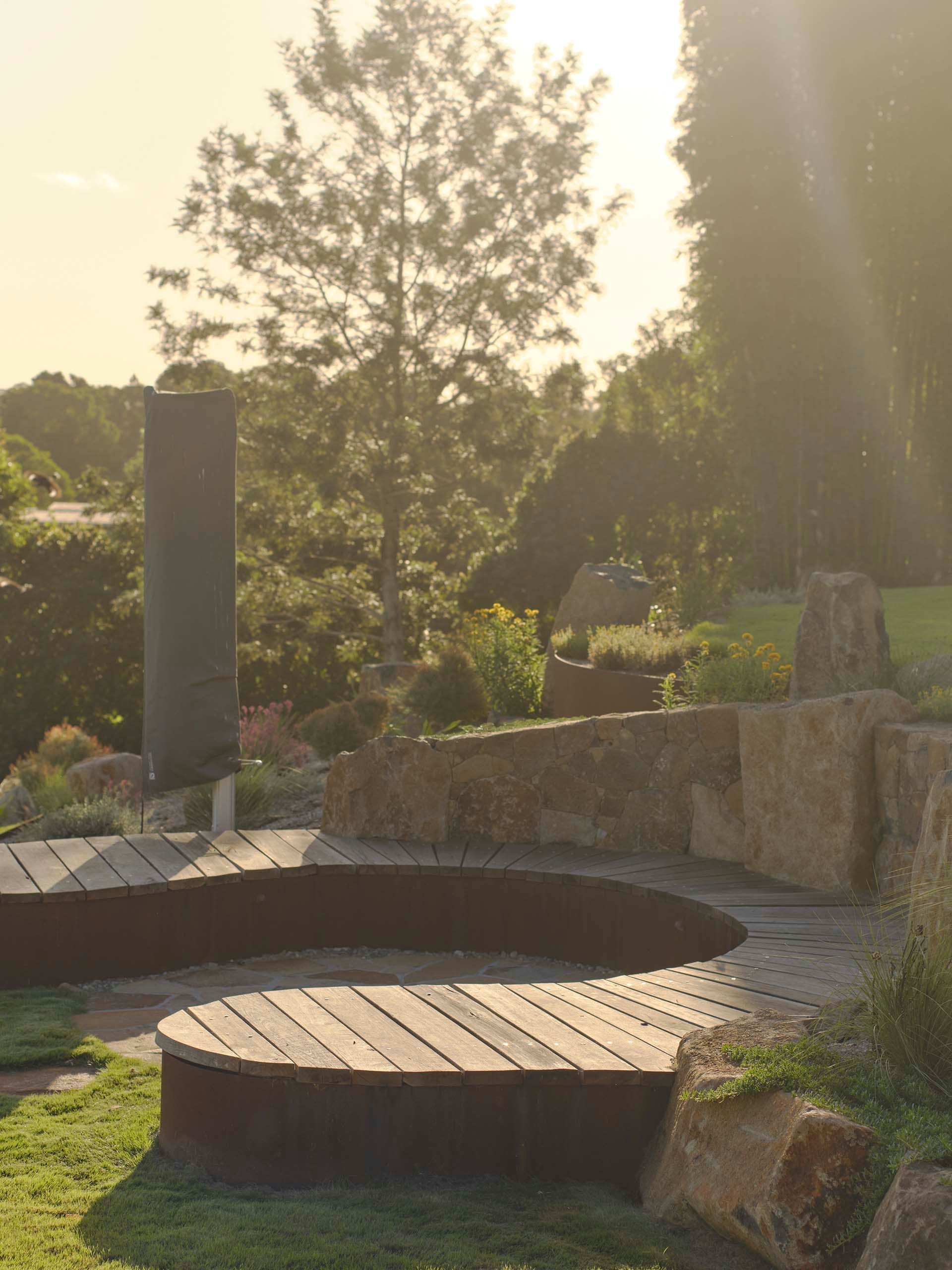
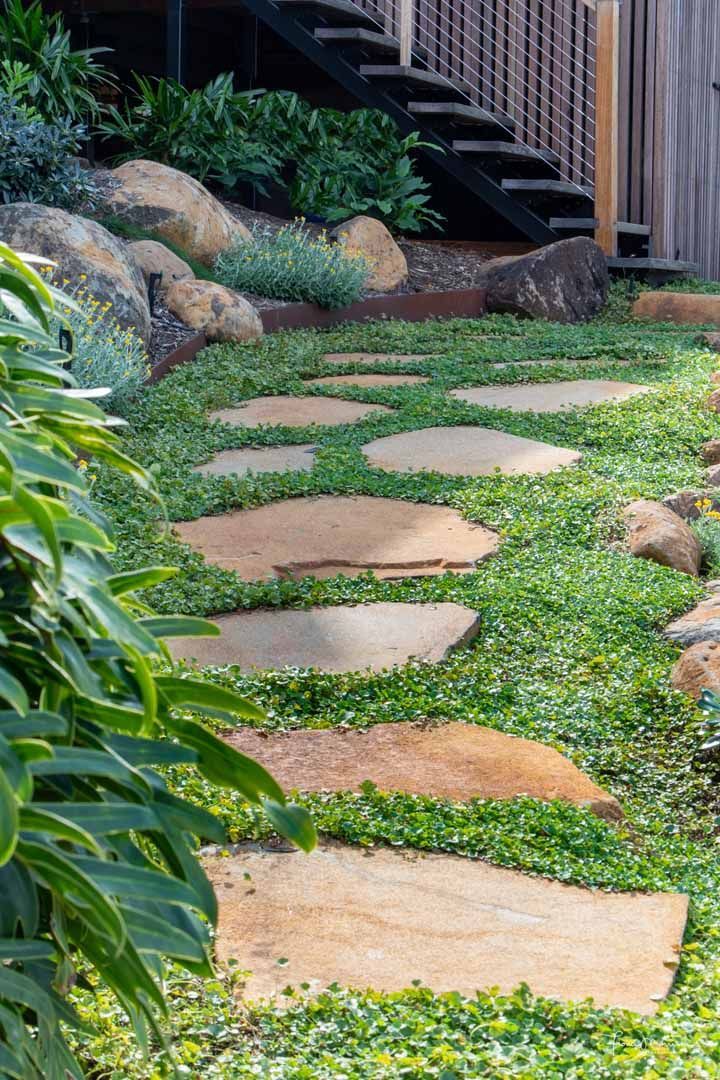
Then create outdoor rooms: a living area, screening zone, productive corner and habitat pocket. Native gardens feel more resolved when hardscape, retaining edges and natural stone are used to support movement and legibility rather than compete with planting.
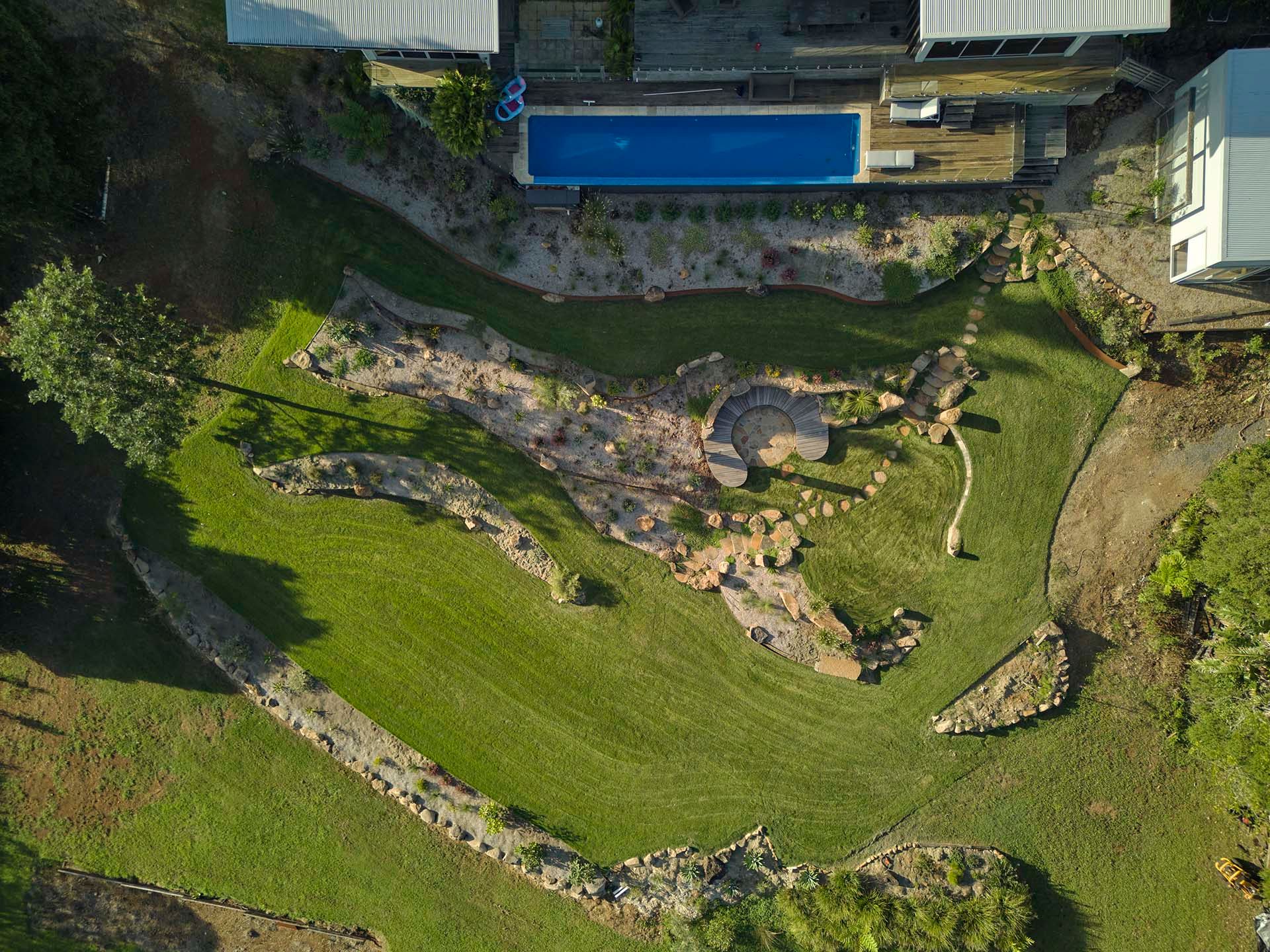
Birds eye view garden layout at Fowlers Lane
Step 4: Build Water-Sensitive Features That Look Good
Swales, rain gardens and constructed wetlands are forms of beautiful drainage because they make water visible, legible and useful, but larger systems may require professional design and local approvals. Directing roof and surface runoff into planted systems helps slow, spread and soak water, which reduces pressure on low points and downstream boundaries.
The key is controlled overflow. Every water-sensitive feature needs a safe spill point for extreme rain, because resilience depends on what happens during the biggest events, not the average shower.
Swales and Rain Gardens: Simple Specs to Get Right
Place swales on contour, keep them clear of building footings and underground services, and include level sills or defined overflows to a safe discharge point. In the wet zone, use rushes and mat-rushes, then shift to tougher groundcovers on the batters where moisture fluctuates more sharply.
Constructed Wetlands for Permanently Wet Areas
Constructed wetlands suit blocks with seep lines or permanently wet depressions that never truly dry out. Baumea rubiginosa, supported by companion sedges and rushes, improves filtration and habitat value, especially when local provenance plants are installed in stages to reduce weed pressure.
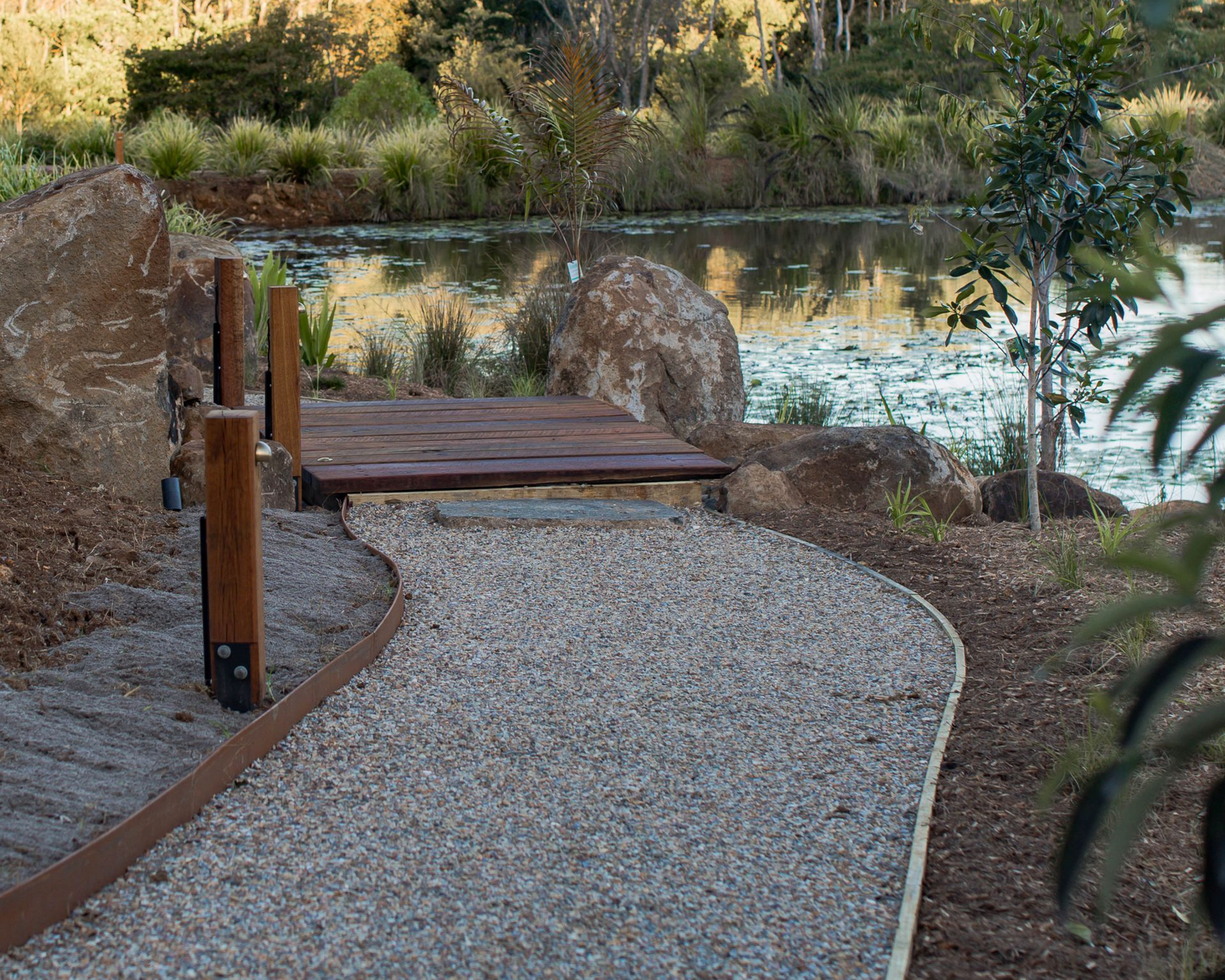
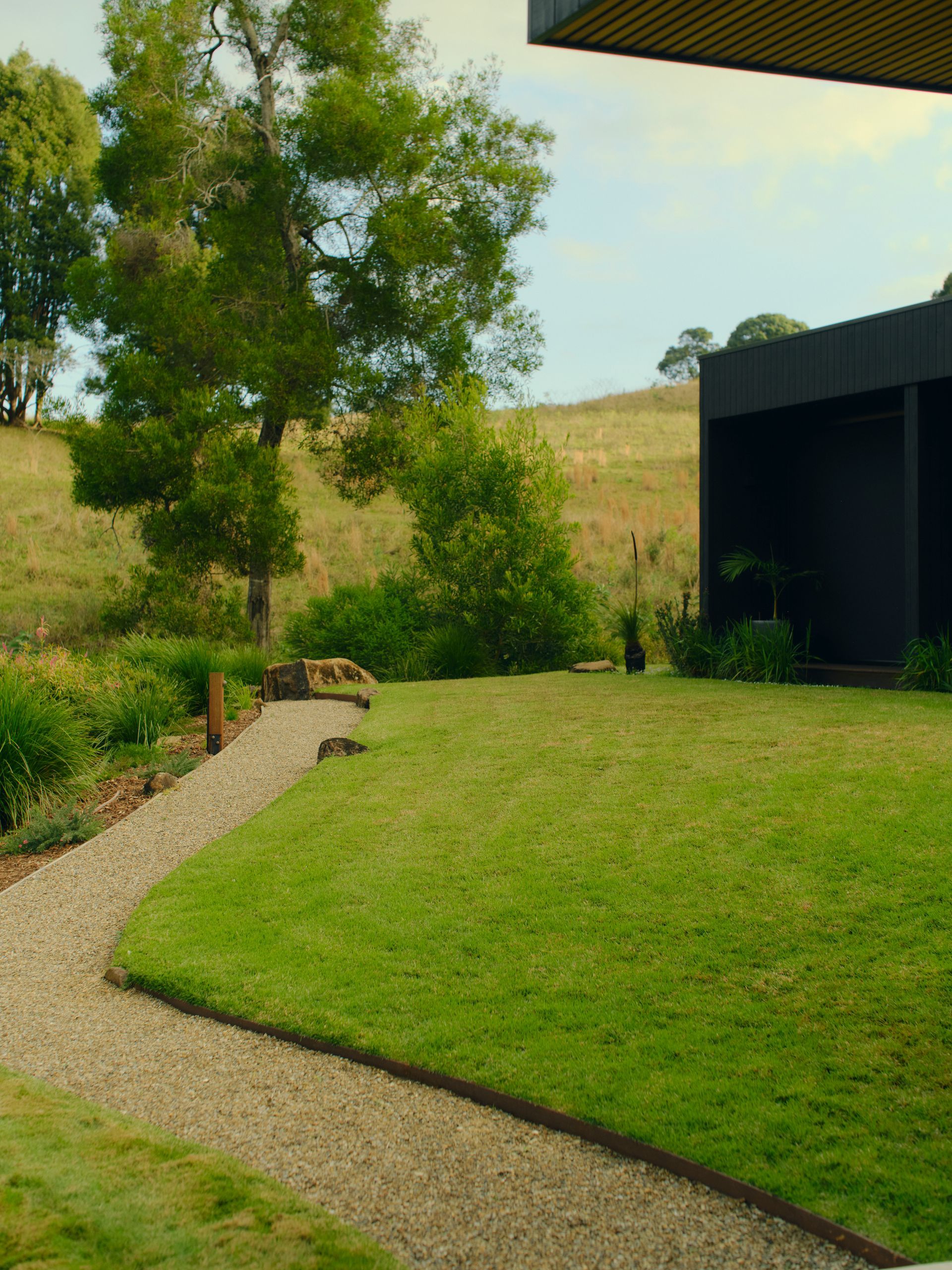
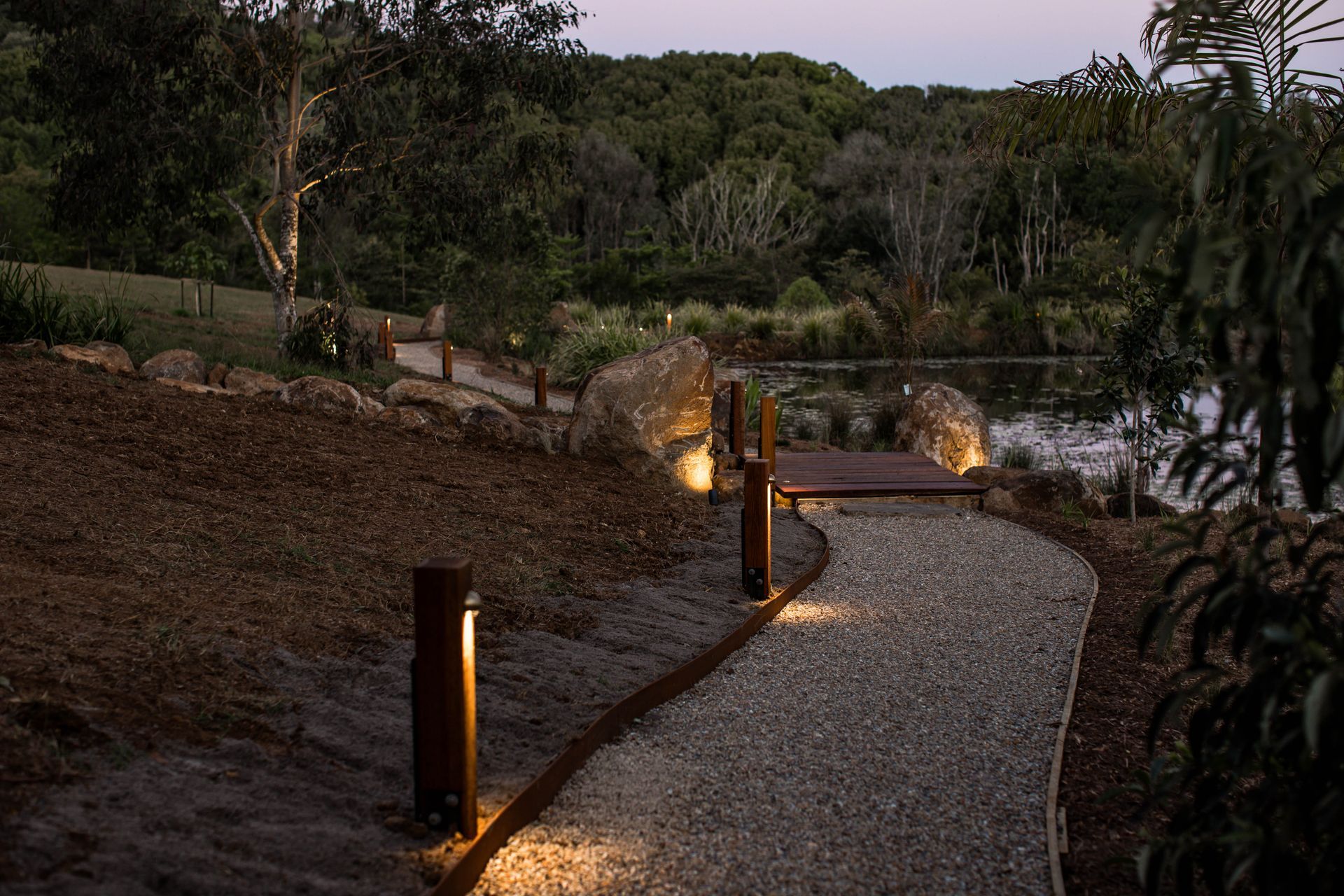
Winding path by the dam at Federal
Examples: Byron Bay Native Garden Concepts for Real Properties
A coastal dune garden needs salt-tolerant structure, Pigface for erosion control and layered wind buffering. A wet backyard or seep line suits a paperbark canopy with a rushy understorey and a rain garden that makes wetness an asset instead of a flaw.
A hillside block benefits from terraces, deep-rooted grasses and strategic groundcovers that hold banks without overbuilding. In a small garden, a tight palette, repeated forms and one hero tree create impact; that same spatial discipline also underpins how to design a garden that feels like a resort.
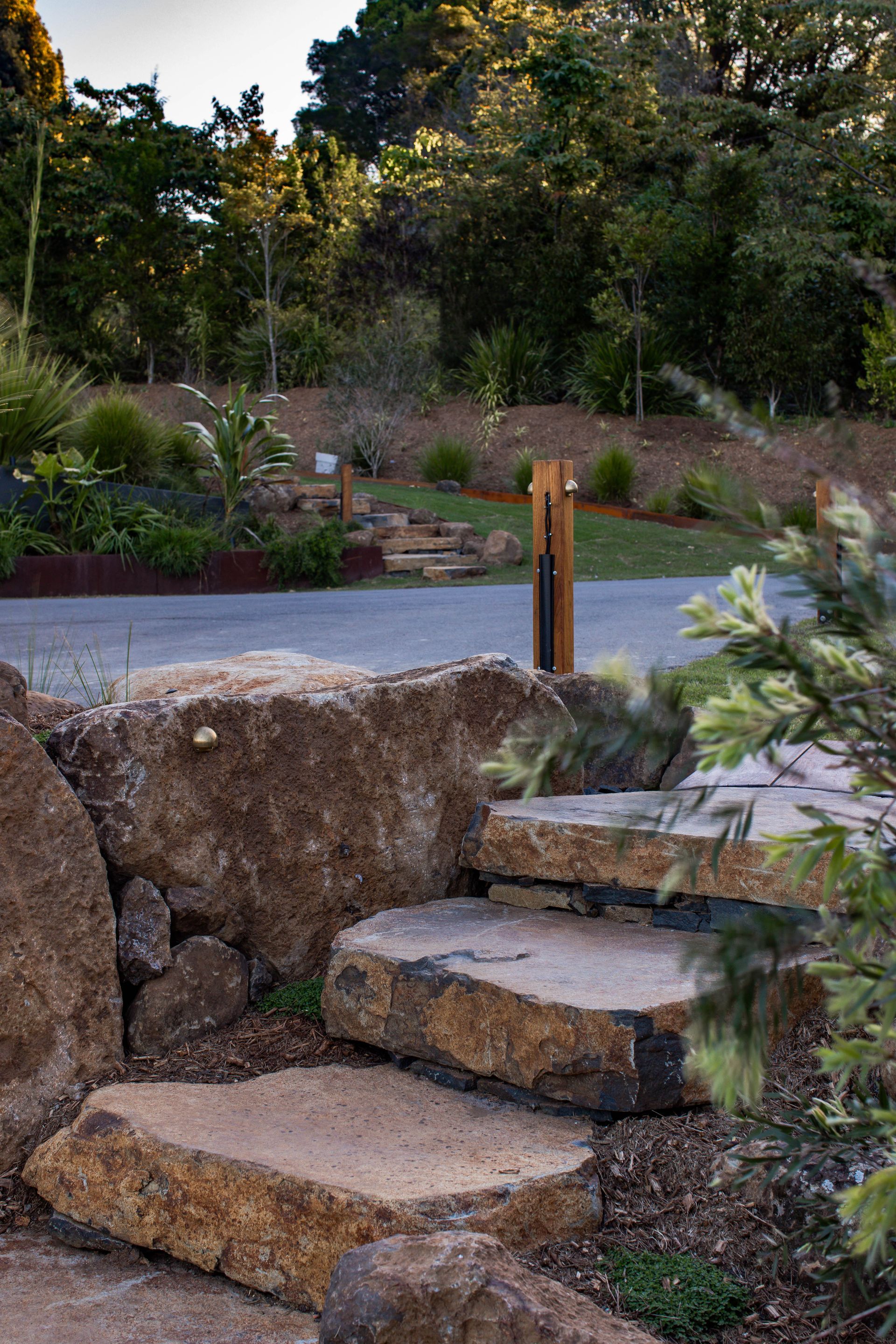
Let’s Design a Space That Feels Like Home
Each garden is a chance to create something meaningful.
We bring together the best in design, construction, and stonemasonry to deliver landscapes that belong.
We help you realise a tranquil retreat, a functional entertaining area, and aesthetic solutions to challenging sites.
Request a site visit to begin the design process today and discover what’s possible for your property.
Frequently Asked Questions

We're not your typical gardeners, we're state-of-the-art landscapers.
At Gondwana Landscaping and Stone, we transform outdoor spaces into breathtaking, functional sanctuaries—designed with precision and built to last. We're an end-to-end landscape design & construction company:
🏡 Native Landscape Design
👷🏽♂️ Comprehensive Project Management
💐 Garden Maintenance
🪨 Paving & Stone Flagging
🪵 Retaining Walls (Timber & Stone)
💡 Outdoor Lighting
🏊♂️ Pool Surrounds
🌳 Decks & Pergolas
💦 Water Features
🚜 Earthworks & Driveways
🌱 Edible Gardens & Plant Selection
🌿 Turf Installation & Irrigation
🧱Privacy Screens, Brick & Block Work
No hidden fees or blown up budgets - Discover Gondwana
Let’s bring your vision to life—on time, on budget, and beyond expectations.
Speak to Mark today to get a design consultation!