
July 16, 2026
Author: Mark Smith
Reading Time: 3 minutes
How to Landscape a Sloped Yard: 3 Key Considerations
By Mark Smith, Founder of Gondwana Landscaping & Stone
For nearly three decades, Gondwana has shaped landscapes across the Byron Shire and
Northern Rivers.
Most Byron Bay acreage blocks share the same complication: they are not flat.
Sloped yard sites hold enormous potential, but only if the gradient is treated as the starting point of the design, not an obstacle to be flattened out of the plan.
Landscaping a slope well means working with the land's own logic: how water moves through it, how soil behaves under rain, and how people will actually walk, sit and garden across an incline. Here are the three considerations that shape every sloped block we work on.
1. Solve the slope before you plant anything
Before a single plant goes in the ground, the slope itself needs a plan. Grading, drainage and erosion control are the foundations.
Northern Rivers soil, much of it heavy Krasnozem clay, holds water beautifully until it doesn't. Once saturated, that same clay turns a slope into a slide. Left unmanaged, water run-off carves gullies, undermines garden beds and accelerates the soil erosion that costs far more to fix later than to prevent early.
Retaining walls are usually part of the answer, and on acreage blocks we favour dry stone or mortared stone retaining walls over railroad ties or timber sleepers. Stone reads as permanent rather than temporary, and it ages with the landscape instead of against it. Step terracing, where a slope is broken into a series of level platforms, does double duty: it slows water down and creates usable flat ground for planting or seating.
For steeper runs, boulder stairs set directly into the hillside often outperform a poured concrete stairway, both visually and structurally.
Rain gardens and bio swales, shallow planted depressions that catch and filter run-off, are worth considering wherever water naturally collects, particularly near driveways or at the base of a slope.
Get the soil type assessed early. Clay, loam and sandy pockets often sit within metres of each other on the same block, and each behaves differently under a retaining wall or a garden bed.
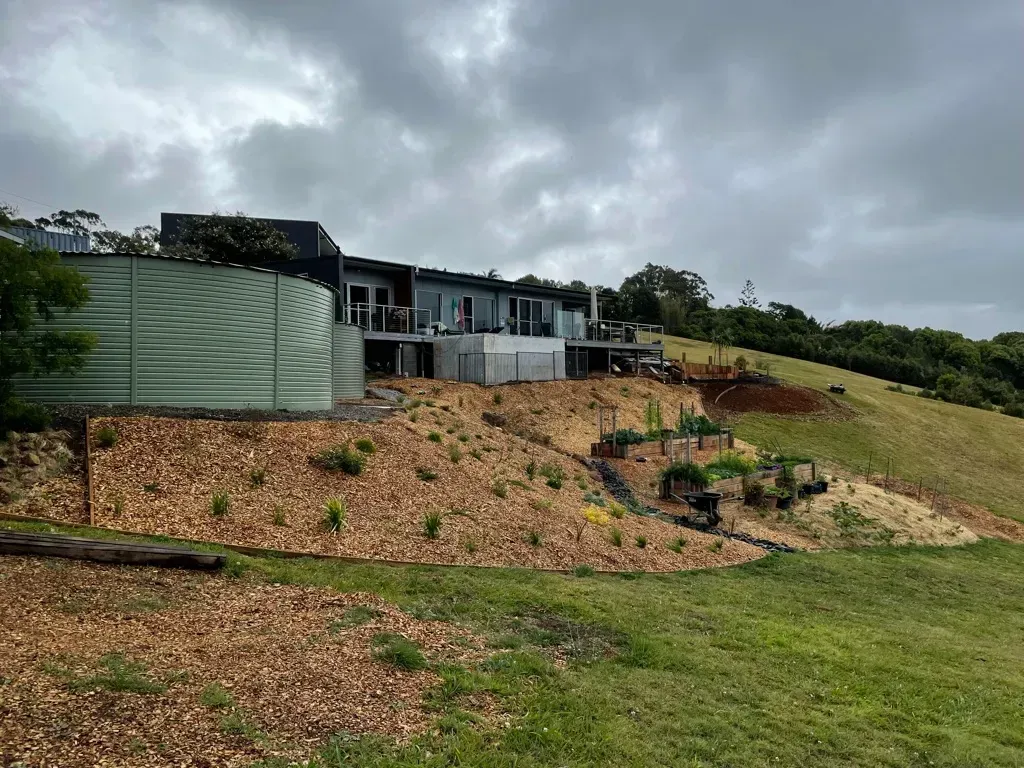
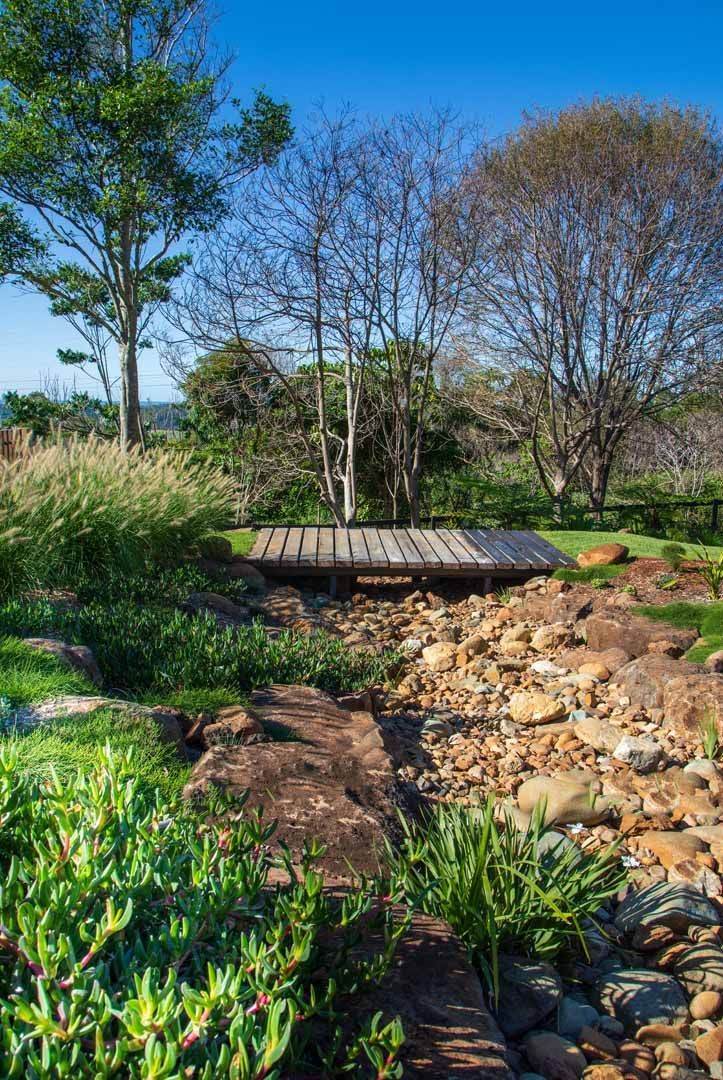
Before: At Fowlers Lane, the solution to the sloped block was surface-level: mulch, which wouldn't hold up past a couple of typical shire Summer downpours.
2. Choose a planting strategy built for gradient
A slope changes everything about how plants perform. Water drains faster at the top and pools lower down, so a single irrigation zone across the whole gradient almost always overwaters one end and starves the other. This is where hydrozoning earns its keep, grouping plants by water need and placing each group at the point on the slope where that need is naturally met.
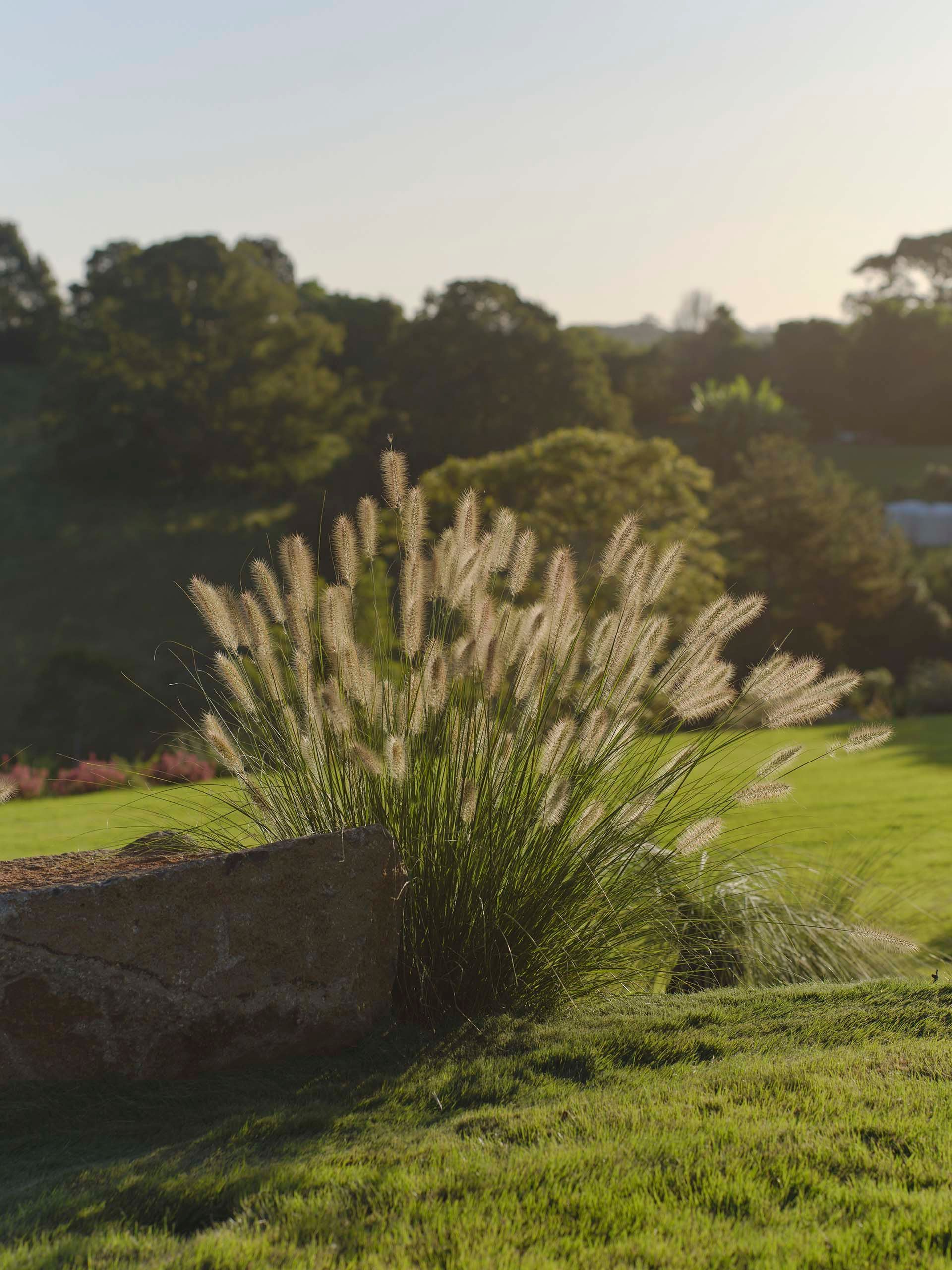
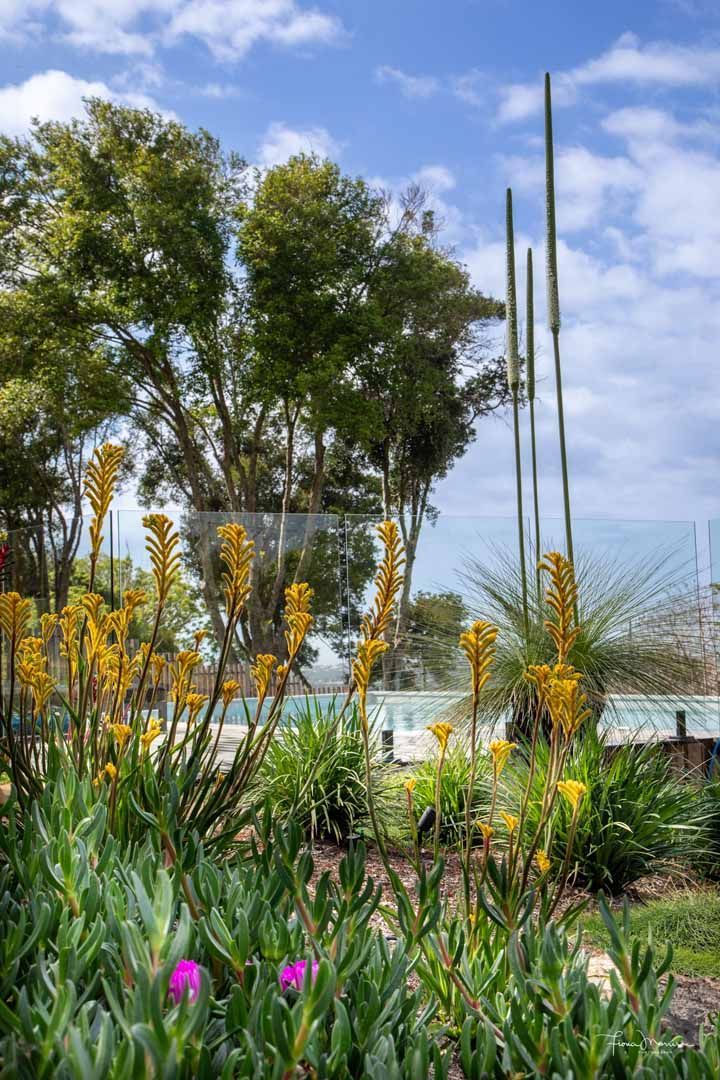
Native plants are the backbone of a well designed sloped garden here, not out of obligation, but because they are the only plants genuinely built for this soil, this rainfall pattern and this heat. A strong ground cover layer, planted densely, is one of the most effective forms of erosion control available, and it looks considerably better than exposed mulch or bare earth within a season.
On steeper faces, vertical gardens and terraced planting pockets let you work with the incline rather than fighting it, while a generous layer of mulch across every bed slows evaporation and protects the soil structure underneath.
For clients wanting more than ornamental planting, hillside orchards and edible landscapes suit sloped blocks particularly well. Espaliered vines and trained fruit trees make efficient use of a steep face, and terraced
landscape design gives each row its own level, well-drained bed.
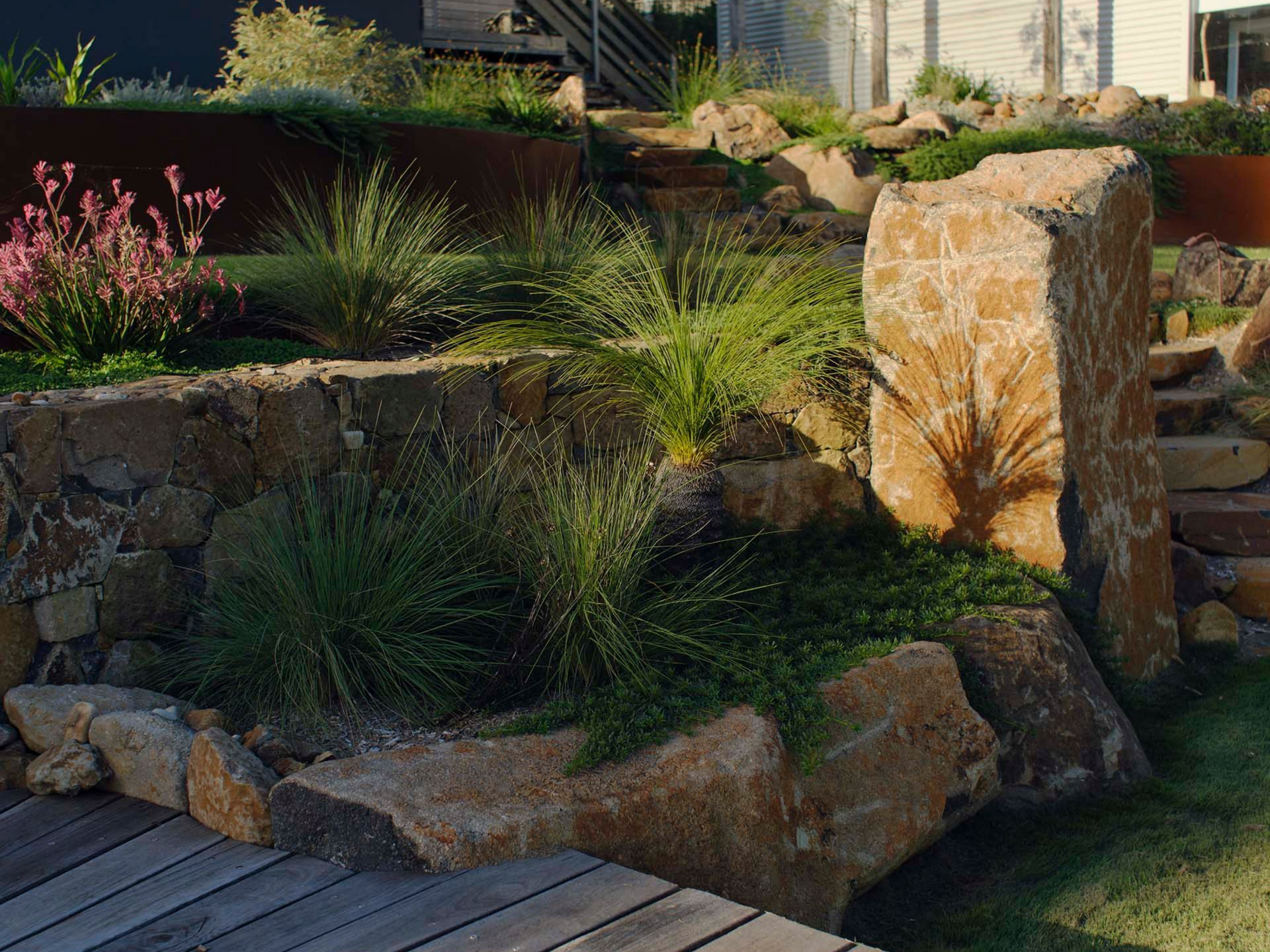
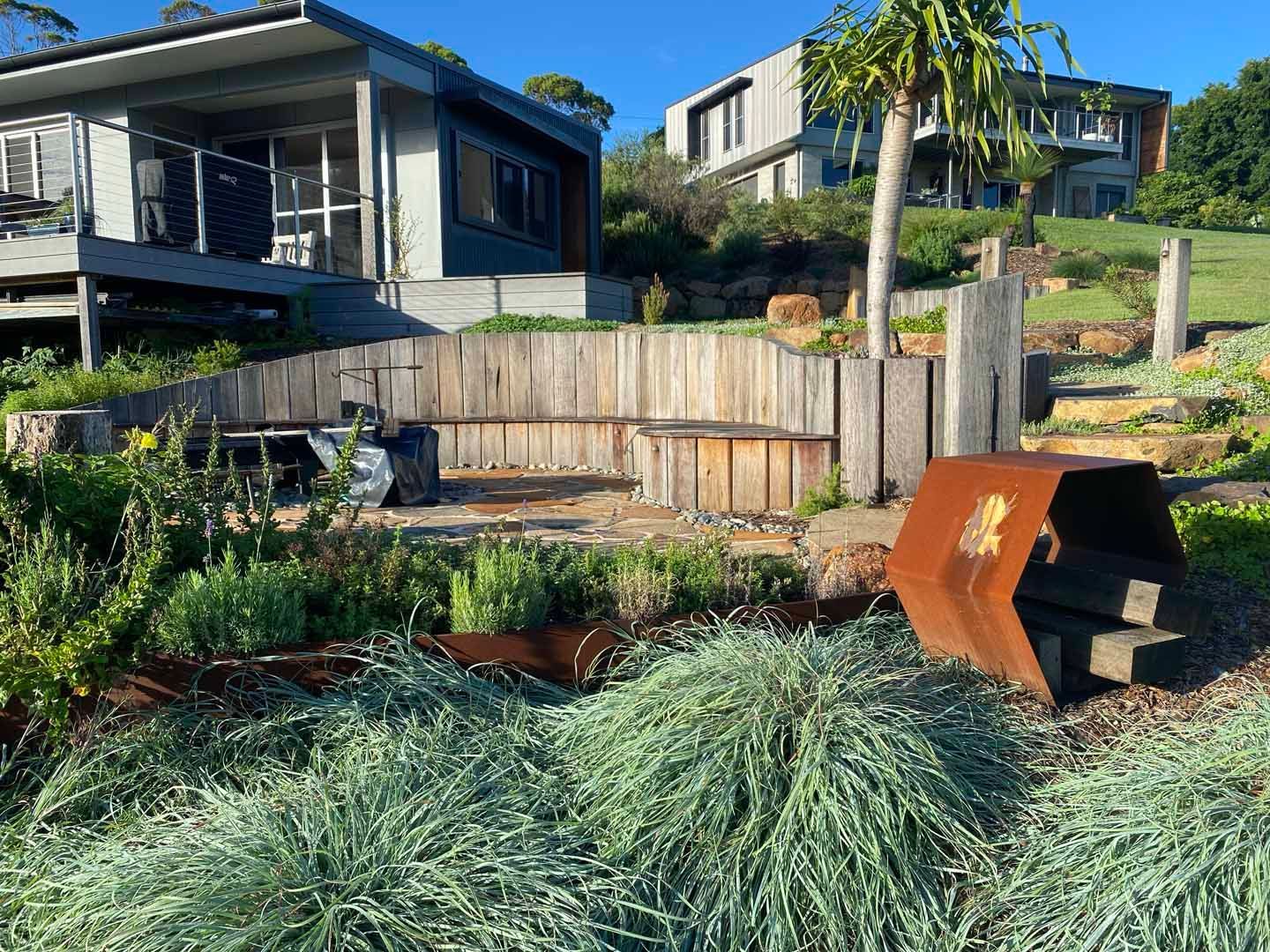
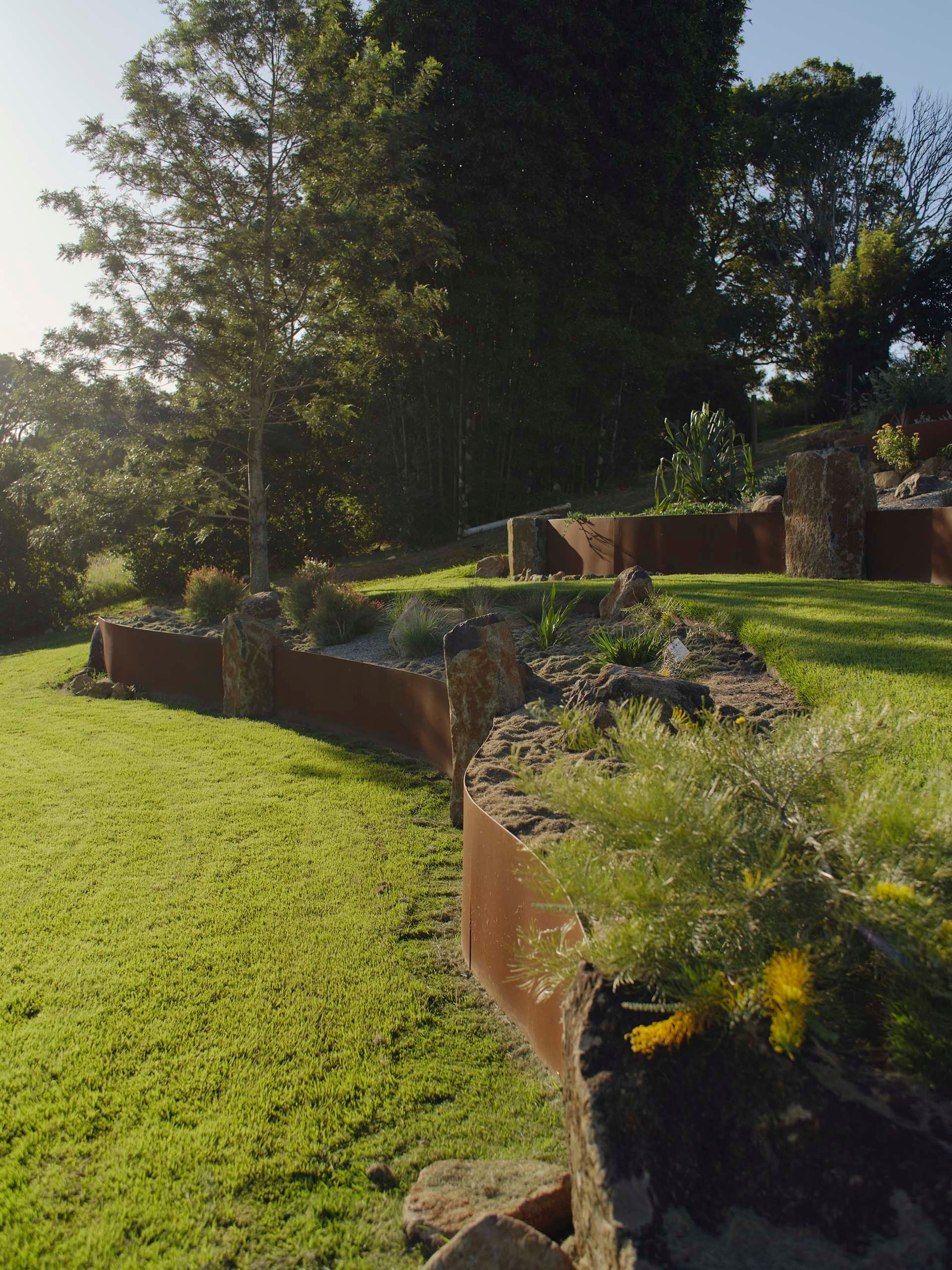
After: These terraced garden structures control erosion and, when combined with drainage solutions, keep the issue at bay. Read more about our sloped landscaping ideas
3. Design the experience, not just the incline
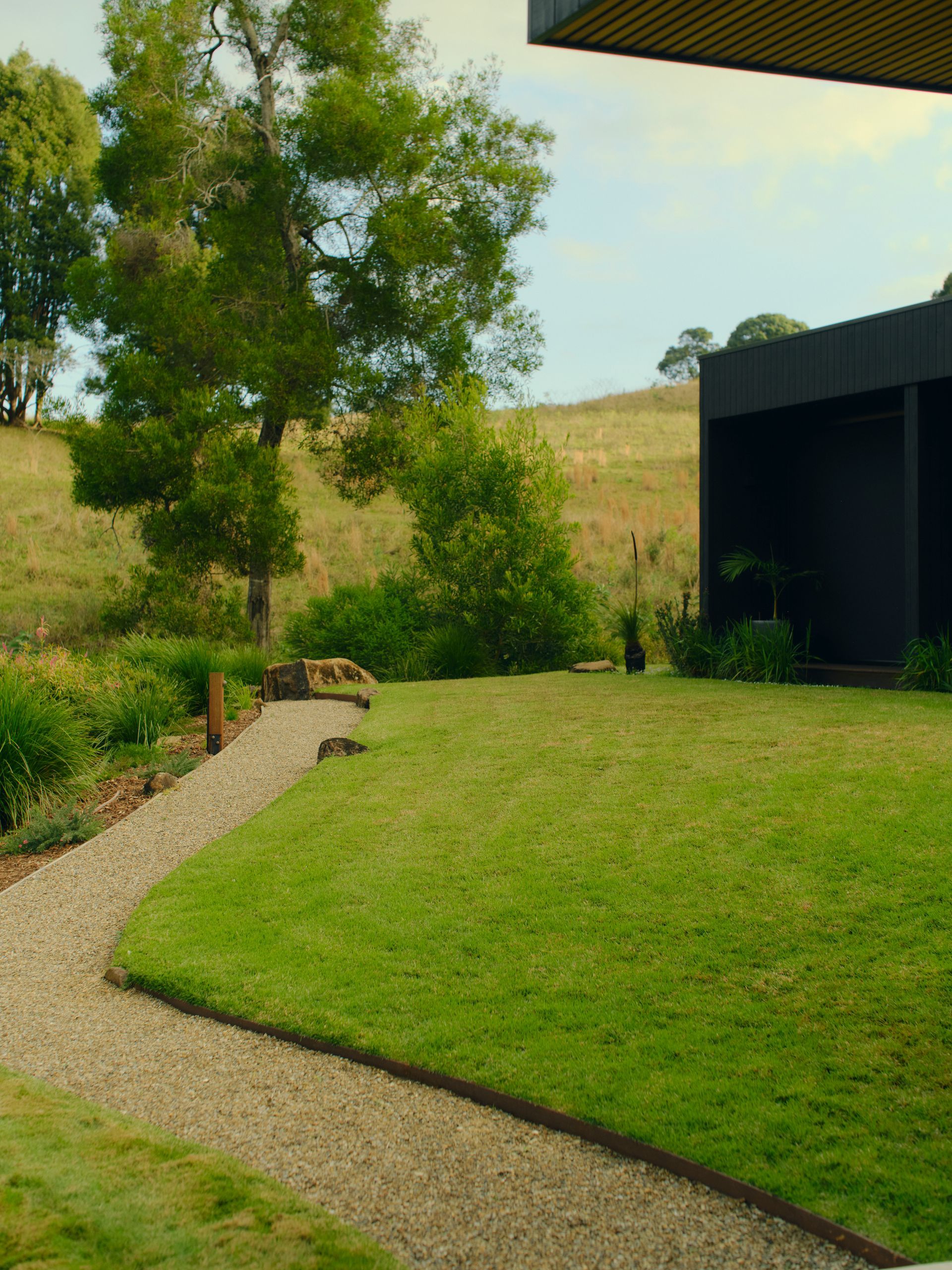
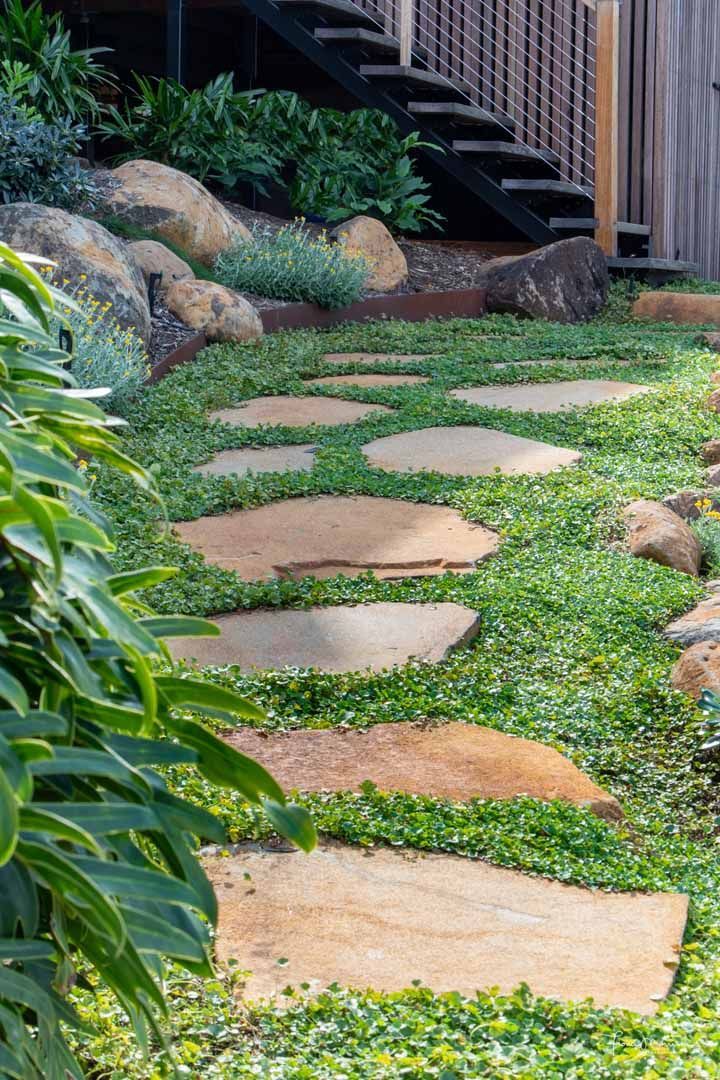
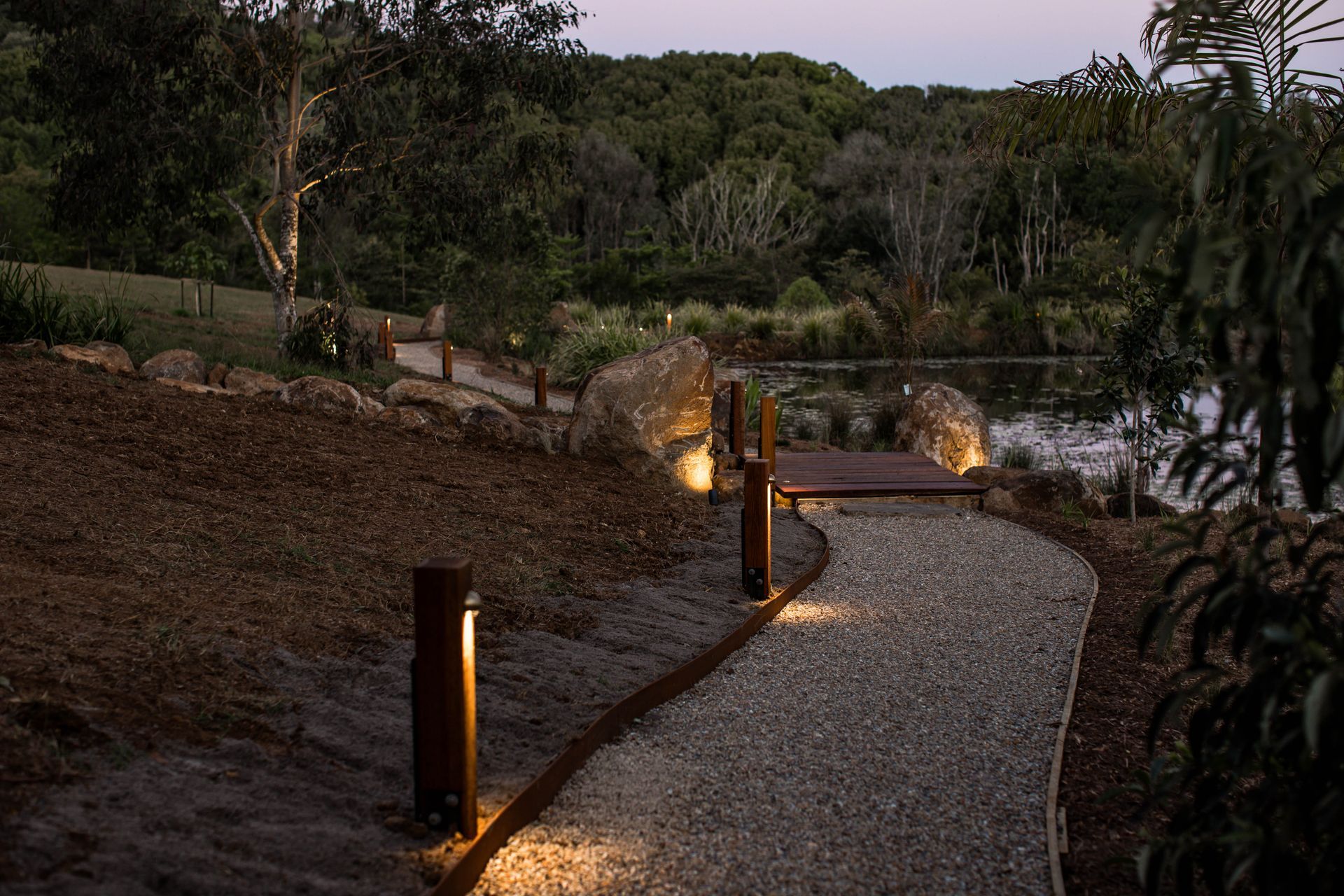
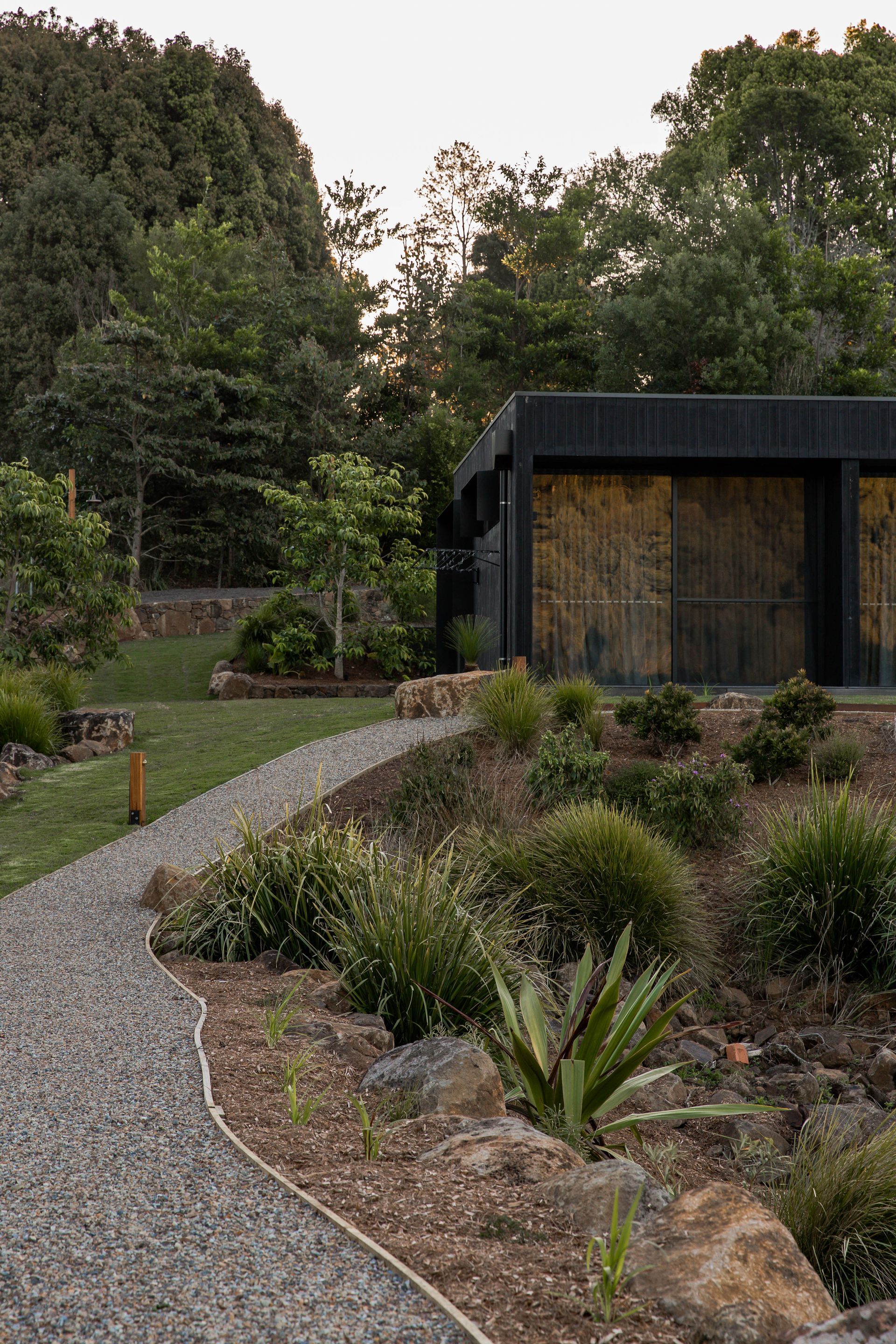
The best sloped gardens invite you to walk through them. A pathway that curves rather than cuts straight down the block feels far more generous on a slope. Winding paths or ramps like this slow the wandering experience and allow you to take in the plantings.
Stairways deserve the same design attention as any other feature. A slope becomes accessible with low stone steps, railings, and subtle ramps.
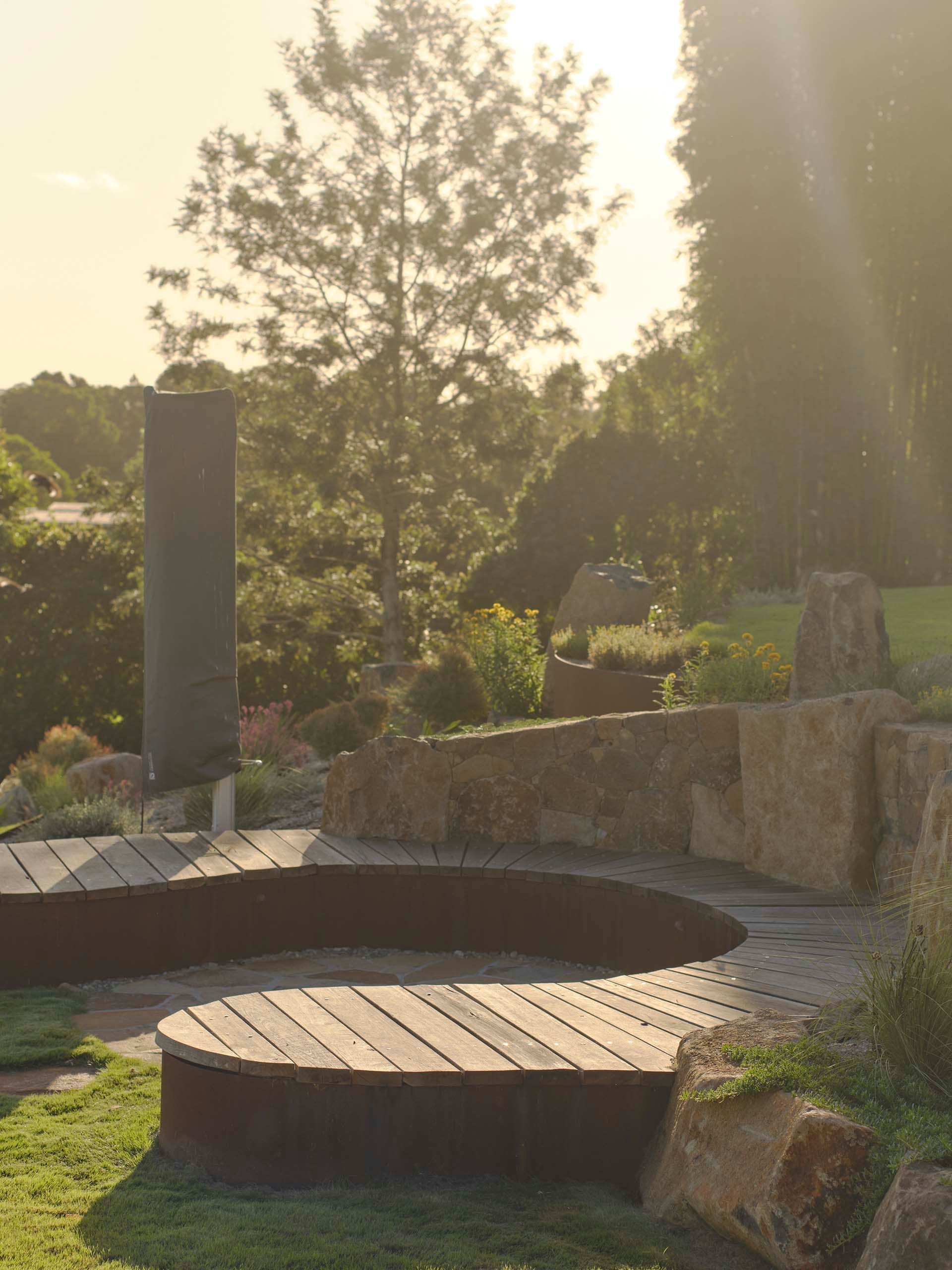
Flat terraces created through grading open up space for the parts of the garden people actually use: a fire pit positioned to catch the last of the afternoon light, a rock garden tucked into a sunny pocket, or a run of planter boxes along a lower terrace where the soil is easiest to manage.
This is also where landscape design earns its place ahead of construction. A masterplan drawn before any hardscaping begins means the retaining walls, pathways and planting all answer to one coherent idea, rather than being solved piecemeal as problems arise.
Our garden design starts with walking the land to understand the site conditions. It's the difference between a garden that looks forced and one that looks like it was always meant to be there.
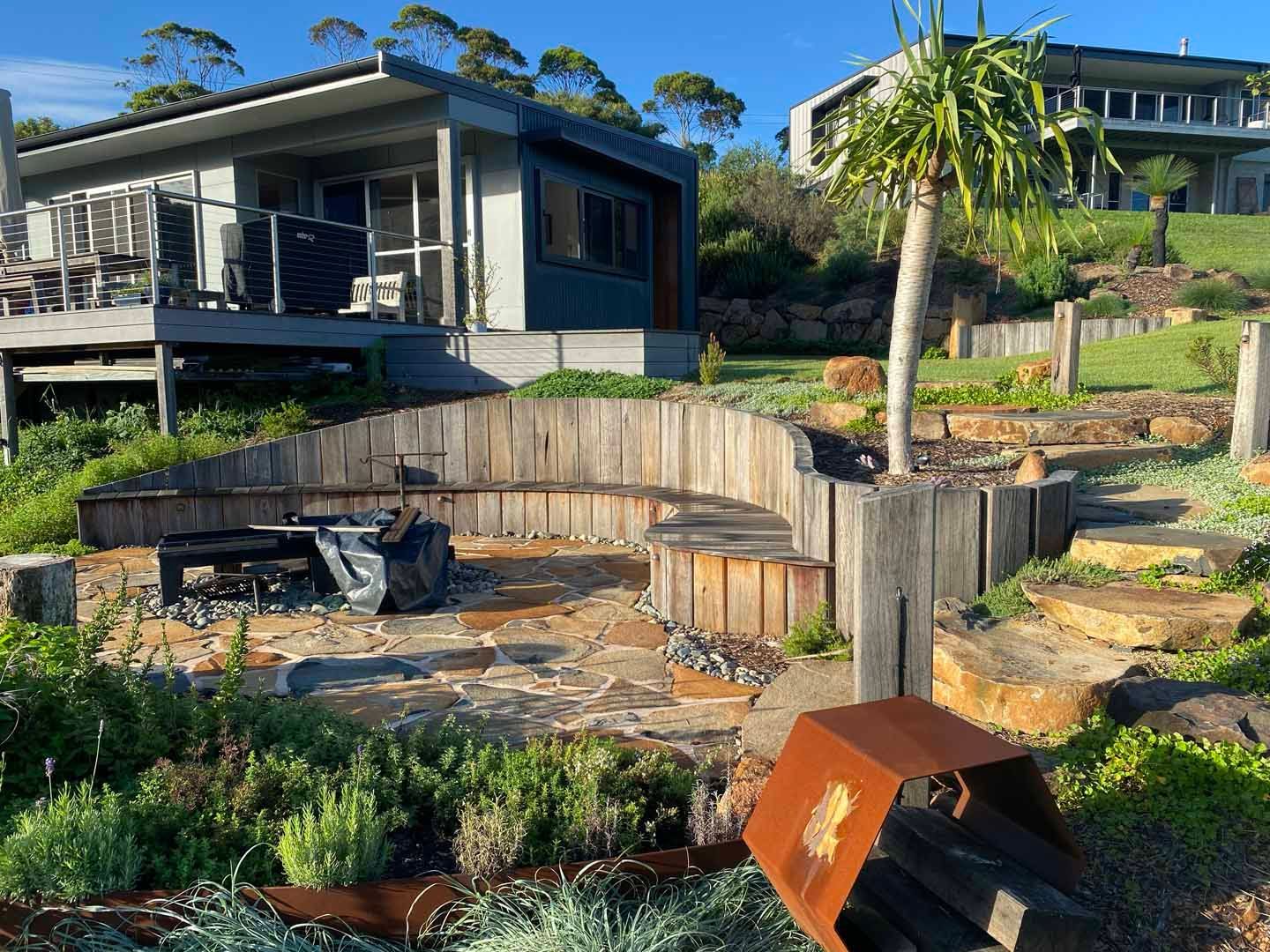
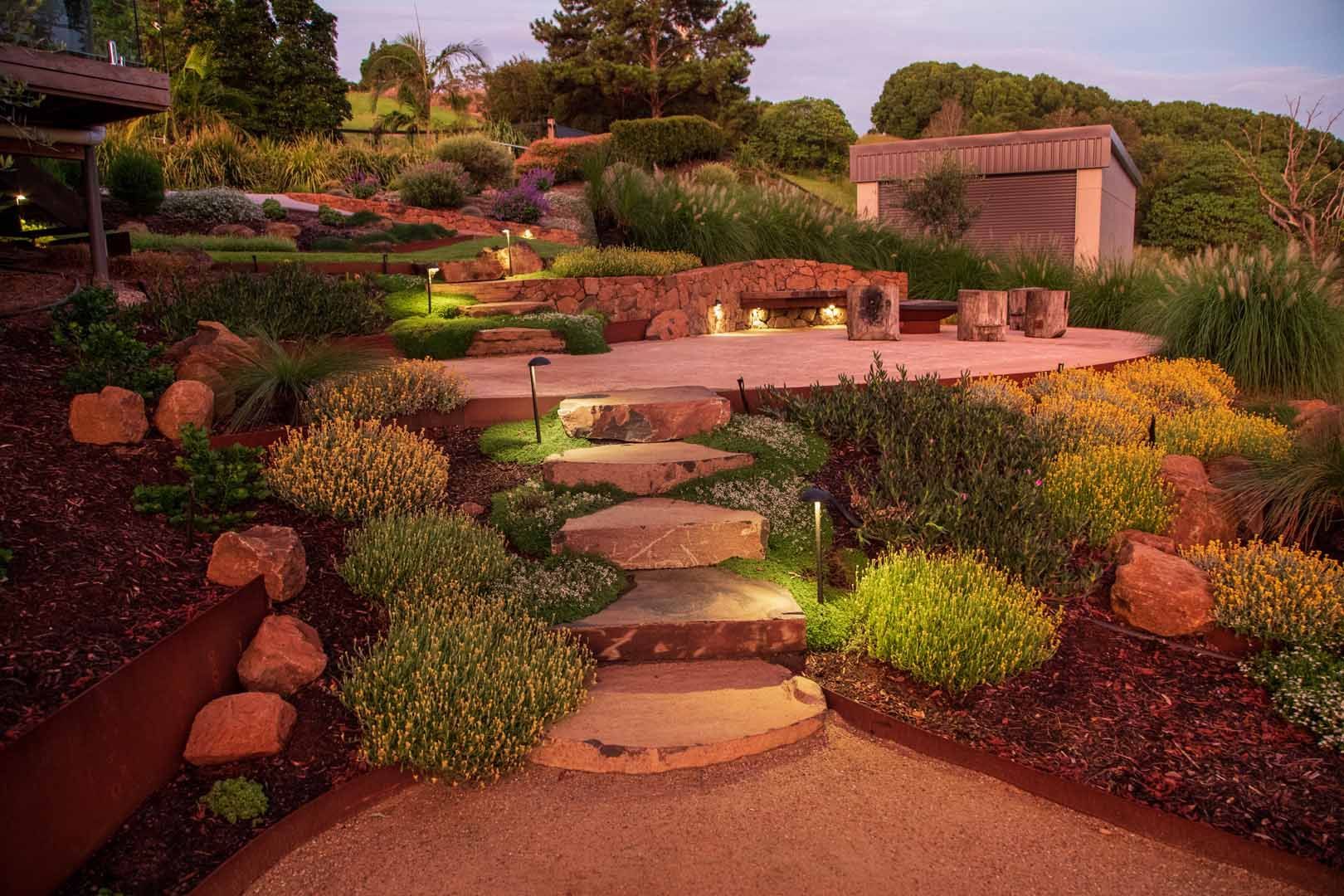
These stairs naturally lead to a strategically placed fire pit and seated area, slowing the flow of water in heavy rain.
Getting started
Every sloped block on this stretch of coast is different, and the right approach depends on gradient, soil type, orientation and how the family actually wants to use the land.
We've been reading Byron Bay's hillsides for close to thirty years. Our design approach is built around solving the biggest challenges Byron homeowners face on sloping land.
If you're ready to talk through a full landscape installation, request a site visit to walk the land with Gondwana Founder, Mark Smith.
For more
landscape design inspiration for your own sloped yard, view our landscaping projects:
Let’s Design a Space That Feels Like Home
Each garden is a chance to create something meaningful.
We bring together the best in design, construction, and stonemasonry to deliver landscapes that belong.
We help you realise a tranquil retreat, a functional entertaining area, and aesthetic solutions to challenging sites.
Request a site visit to begin the design process today and discover what’s possible for your property.

We're not your typical gardeners, we're state-of-the-art landscapers.
At Gondwana Landscaping and Stone, we transform outdoor spaces into breathtaking, functional sanctuaries—designed with precision and built to last. We're an end-to-end landscape design & construction company:
🏡 Native Landscape Design
👷🏽♂️ Comprehensive Project Management
💐 Garden Maintenance
🪨 Paving & Stone Flagging
🪵 Retaining Walls (Timber & Stone)
💡 Outdoor Lighting
🏊♂️ Pool Surrounds
🌳 Decks & Pergolas
💦 Water Features
🚜 Earthworks & Driveways
🌱 Edible Gardens & Plant Selection
🌿 Turf Installation & Irrigation
🧱Privacy Screens, Brick & Block Work
No hidden fees or blown up budgets - Discover Gondwana
Let’s bring your vision to life—on time, on budget, and beyond expectations.
Speak to Mark today to get a design consultation!